Skip to content
Nodeyra.

Illustrative project

FintechBackend & cloud

A phased approach to payment platform modernisation.

How we would approach updating an existing payment platform, with staged changes, careful testing, and a clear handover plan.

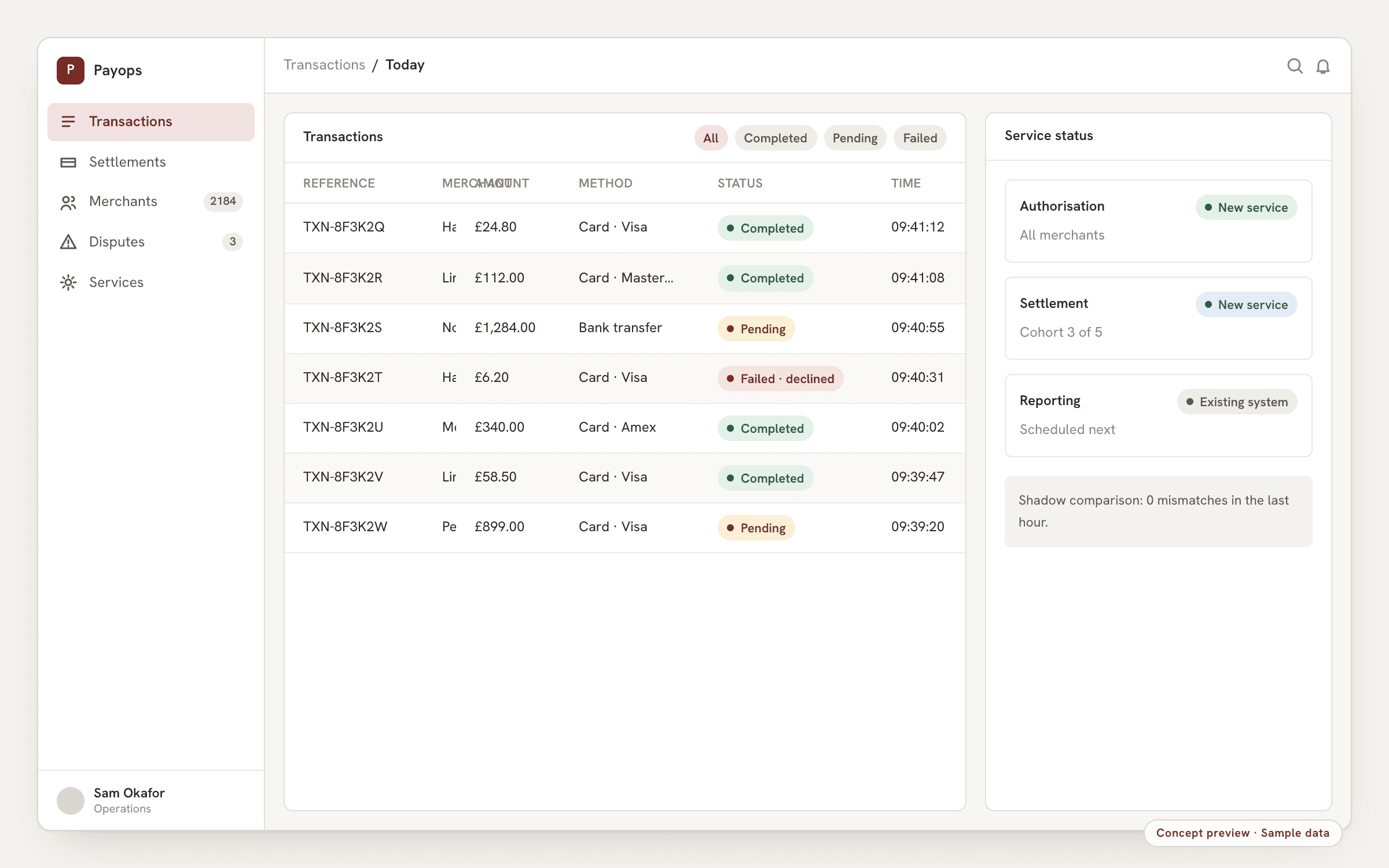
Concept preview, sample data: a payment operations screen listing transactions by status, with each core service marked as migrated, in cohort rollout or still on the existing system
INDUSTRY
Fintech
PROPOSED SCOPE
Staged replacement of core payment services, with testing at each step and a handover to the in-house team
TYPICAL TECHNOLOGIES
Python · FastAPI · PostgreSQL · AWS

The challenge

A payment platform rarely gets the chance to stop. Transactions arrive around the clock, so any change has to happen while the system keeps working. Over time the parts that matter most, such as authorising a payment or settling an account, become the hardest to touch, because a mistake there reaches every customer at once.

For the business this shows up as slower releases and a growing list of improvements that nobody wants to risk. The team may know exactly what needs to change, but without a safe way to test and reverse each step, leaving things alone is the sensible choice. The problem to solve is not the design of the existing system. It is finding a way to change it with confidence.
How we would approach it

  1. Understand the existing system

    We begin by reading the code, the data and the support history to map which parts of the platform carry the most risk and which are quiet. That map sets the order of work. The parts that handle money come first, because they need the most care.

  2. Test changes before rollout

    A new service runs in shadow mode before it takes over. It receives a copy of real requests and its answers are compared with the existing system's, without being allowed to take any financial action twice. Automated tests and monitoring are in place before anything is switched.

  3. Introduce changes in stages

    Accounts move to the new service in small groups, known as cohorts, starting with the lowest-risk ones. Each group is checked against reconciliation reports before the next moves. If a problem appears, rollback returns that group to the previous version within minutes.

  4. Prepare the team to maintain it

    The in-house team takes over releases while we are still involved. They receive runbooks, which are practical operating and troubleshooting instructions, along with dashboards and a written record of the decisions made, so the platform can be maintained without us.

Intended outcomes

What a successful engagement would deliver, and how each outcome would be measured.

  • Faster responses under load

    Measured at the 95th percentile, meaning the response time that 95 percent of requests beat, over comparable periods before and after each stage.

  • Changes that can be released safely

    Assessed by how often the team can release and how many releases have to be reversed, tracked from the first staged rollout onwards.

  • A platform the team owns

    Judged by whether the in-house team is running releases and handling incidents on their own by the end of the handover period.

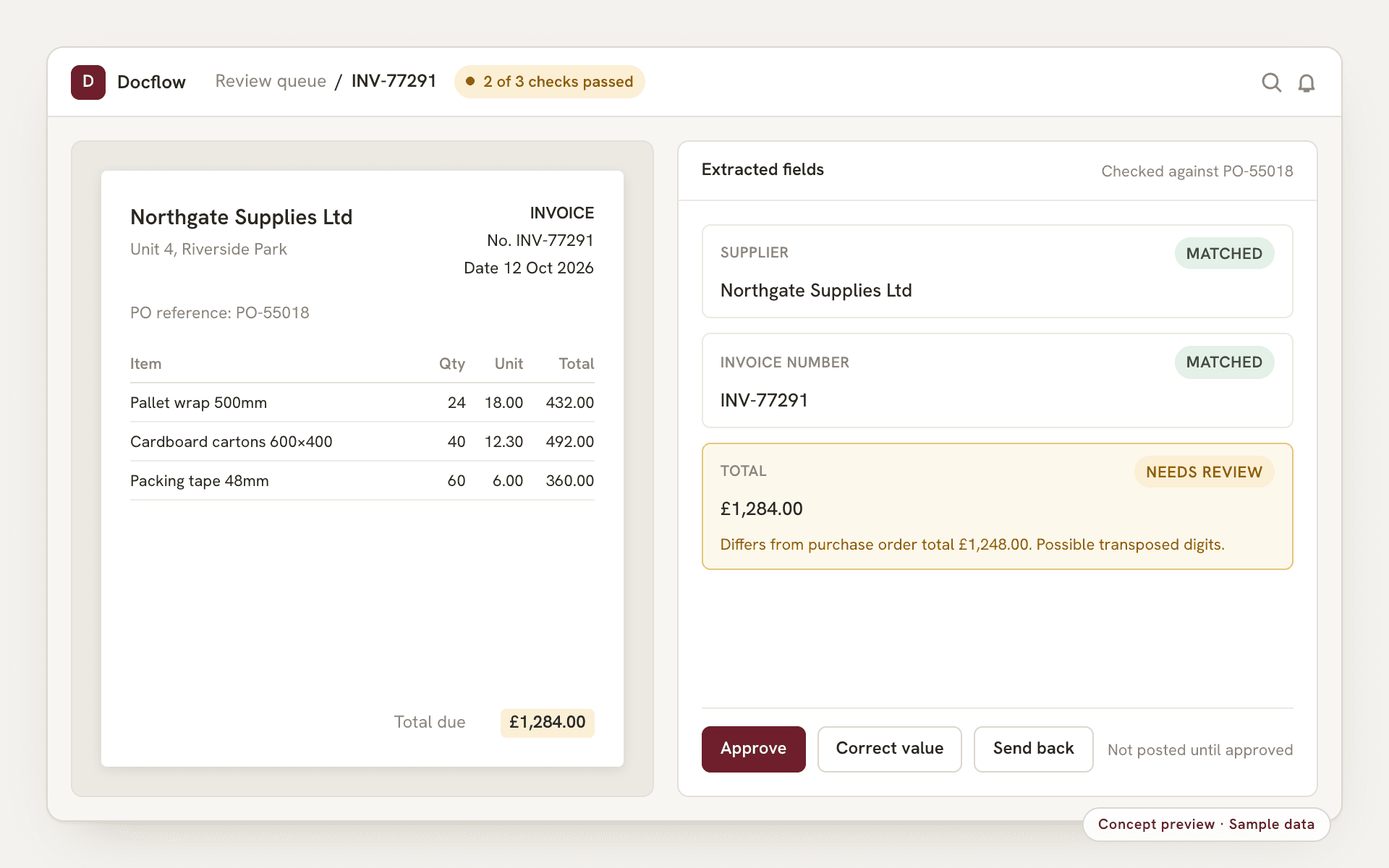
Concept preview, sample data: a document review screen with a supplier invoice beside its extracted fields, one value flagged for review, and approve and correct controlsNext story · Illustrative project · LogisticsAI-assisted document processing for logistics teams.Read next →
Planning changes to an existing platform?

Tell us what you have today and what needs to improve. We’ll discuss the priorities and a practical next step.

Let’s discuss your project