Skip to content
Nodeyra.

Illustrative project

SaaSWeb developmentFirst release

Planning and building a B2B SaaS product.

How we would work with a founder to turn a validated idea into a first release: agreeing what it needs to do, designing the customer experience, and building it so the business can keep improving it after launch.

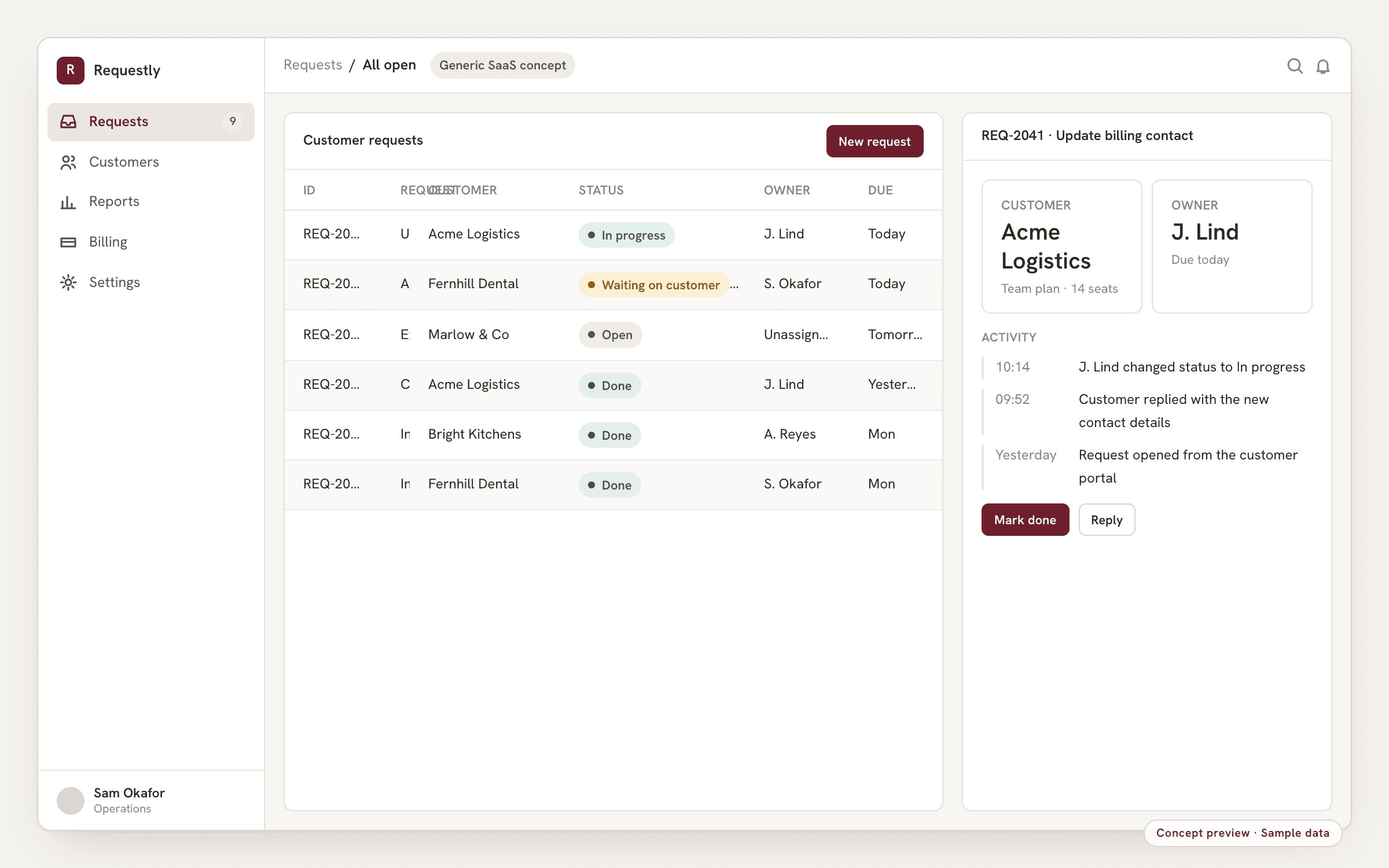
Concept preview, sample data: a generic SaaS workspace for managing customer requests with statuses, owners and an activity log
INDUSTRY
SaaS
PROPOSED SCOPE
Product design, web application, account and billing setup, and launch
TYPICAL TECHNOLOGIES
Next.js · TypeScript · PostgreSQL · Stripe

The starting point

A founder usually arrives with the hardest part already done. They know who the product is for, what those people are trying to get done, and they have often been doing it for a few early customers by hand, with spreadsheets, shared inboxes and a lot of their own time. What they do not have is software, and often no one in-house to build it.

The constraint is rarely ambition. It is choosing a first release small enough to build in a few months and complete enough that customers will pay for it, then building it in a way the founder can keep changing once they learn what customers actually use.
What goes into a first release

The first version is built around the main thing a customer needs to do, with the supporting pieces that make it usable as a real service.

  • The core customer workflow

    The one task that customers are paying to have done, built end to end, before any secondary features.

  • Accounts and separate data

    Each customer has its own account, its own users and its own data, kept separate from every other customer's.

  • Subscription billing

    Plans, payments, invoices and cancellations handled through Stripe, so the founder is not chasing payments by hand.

  • Monitoring and error reporting

    So problems are noticed by the team before they are reported by a customer.

How we would work together

  1. Agreeing on the first release

    We start with the founder and, where possible, their early customers, to list everything the product could do and then decide what the first release must do. The rest goes on a written roadmap so nothing is lost, but the build stays small.

  2. Designing the customer experience

    Before writing application code we design the main screens around the core workflow and review them with the founder, so the shape of the product is agreed before the cost of changing it rises.

  3. Building and reviewing working features

    Features are built in a working state and reviewed together as they are finished. A test version of the product lets the founder and early customers try each feature before launch, and what they find changes what comes next.

  4. Preparing for launch and handover

    Billing, monitoring and account access are checked against real scenarios before launch. The founder or their first engineer receives the codebase with documentation and a walkthrough, so the product can keep moving after we step back.

Intended outcomes

What a successful engagement would deliver, and how each outcome would be measured.

  • A product customers can use and pay for

    Measured by whether the agreed first release is live, with early customers using it for the core workflow and paying through the product rather than by invoice.

  • A first release delivered to the agreed plan

    Assessed against the scope and date agreed at the start, with any changes to that scope recorded and agreed along the way.

  • A product the founder can keep improving

    Judged by whether the team that takes over can release changes on their own, using the documentation and tools handed over.

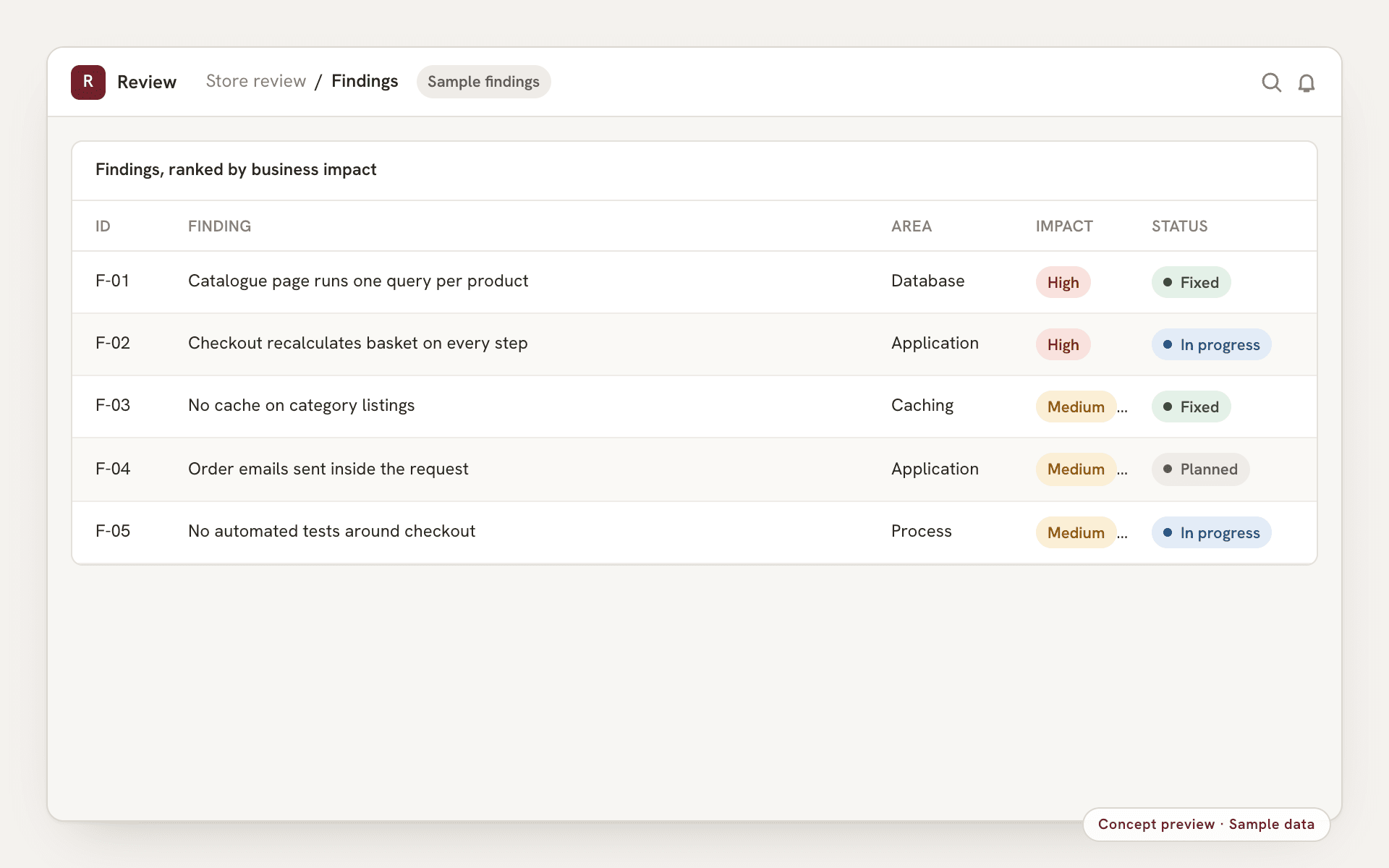
Concept preview, sample data: a findings and remediation view ranking sample review findings by impact, with evidence and the change madeNext story · Illustrative project · E-commerceA practical approach to reviewing an online store.Read next →
Ready to build your first version?

Tell us who your product is for and what it needs to do. We’ll help define a practical first release and a clear plan to build it.

Let’s discuss your product